The Problem Isn't a Lack of Information
The Problem Isn't a Lack of Information
Every day, millions of articles, videos, podcasts, social posts, and alerts compete for our attention.
Yet somehow, despite having access to more information than any generation in history, many people feel less informed than ever.
The problem isn't a lack of information.
The problem is signal overload.
Most people don't need another headline. They don't need another influencer telling them what to think. They don't need another notification demanding their attention.
What they need is time to think.
Over the years, I've noticed something interesting. The people who make the best decisions aren't necessarily the smartest people in the room. They aren't always the most educated. They aren't the people consuming information twenty-four hours a day.
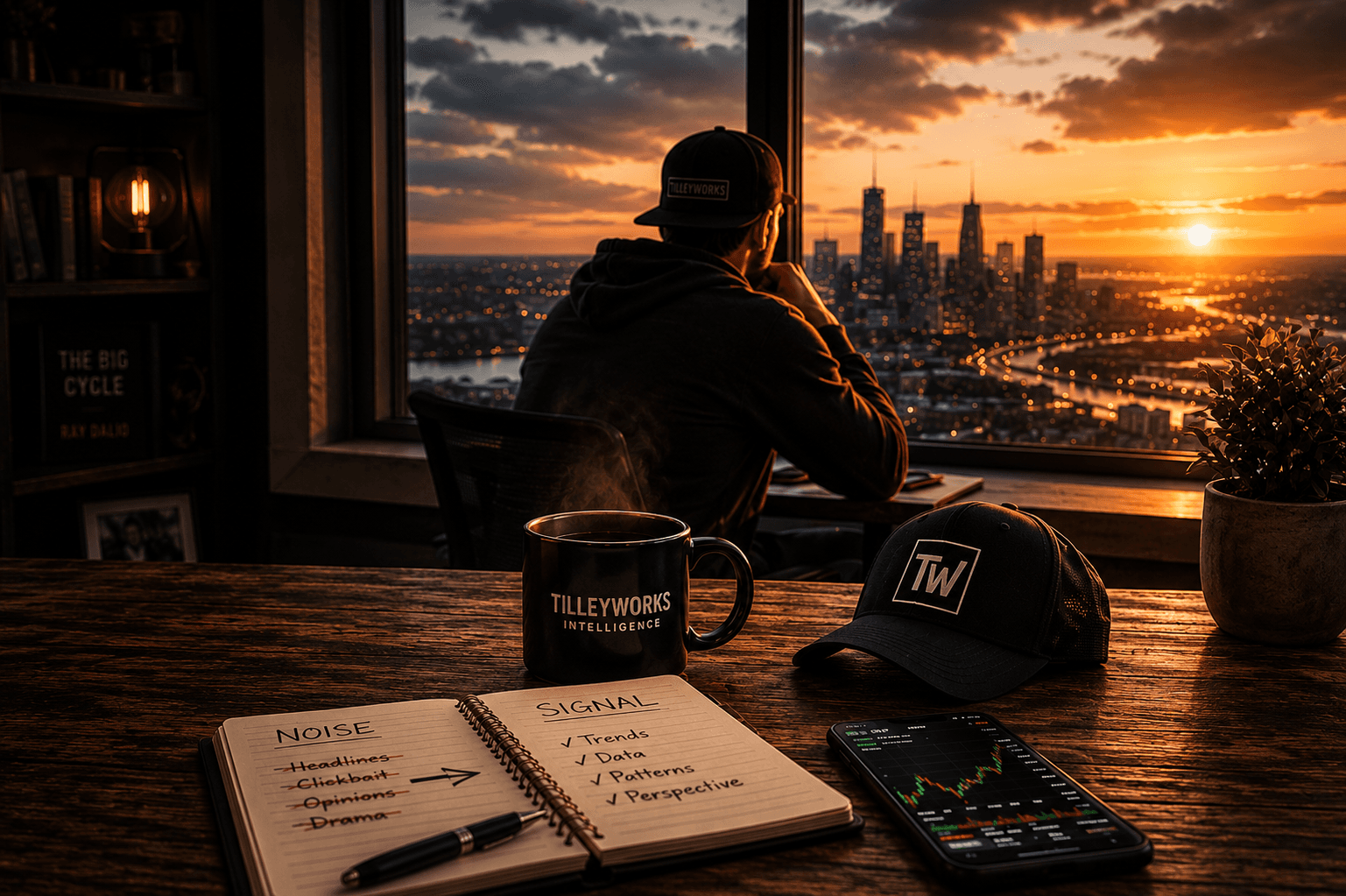
They're the people who can separate noise from signal.
They understand that every piece of information doesn't deserve equal attention.
Some stories matter for a few hours.
Some matter for a few days.
A small number matter for years.
The challenge is figuring out which is which.
That's one of the reasons TilleyWorks exists.
Not to tell people what to think.
Not to chase every headline.
Not to predict the future.
But to slow down long enough to ask a simple question:
"What actually matters here?"
Sometimes the answer will involve markets.
Sometimes technology.
Sometimes media.
Sometimes none of the above.
Intelligence isn't about knowing everything.
It's about recognizing what deserves your attention and what doesn't.
The older I get, the more valuable that skill becomes.
In a world where everyone is shouting, the ability to quietly observe may be one of the most powerful advantages left.
That's the signal.
Everything else is noise.